
In the old world, a sudden crack meant one thing: a branch breaking, a storm arriving, danger close. Every animal is born with a body that answers it in an instant. For a dog, fireworks are that crack again and again, for hours, from every direction, with no storm to explain them.
Why do fireworks frighten so many dogs?
A dog hears far higher sounds than we do, and far fainter ones. To them a rocket is not a bang. It is the sky splitting. In a Norwegian study of more than 5,000 dogs across 17 breeds, around one in five showed strong fear of fireworks, more than of any other sound. That fear also tended to grow with age.

What happens inside a frightened dog?
The nervous system has two branches that work like a seesaw.
The first is the body's alarm: the fight, flight or freeze response, run by the sympathetic nervous system. Adrenaline and the stress hormone cortisol are released. The heart quickens, the breath rises high and fast, the pupils widen, the muscles brace and digestion stops, because a body getting ready to run has no time to eat. This is why a frightened dog may pant, tremble, pace, hide, try to escape, or turn down even a favourite treat.
The second is often called rest and digest, run by the parasympathetic nervous system and led largely by the vagus nerve. It slows the heart, deepens the breath and lets the body return to digestion and sleep.
Fireworks push hard on the first. Our work for the evening is to offer every road back to the second.
When are the fireworks this year?
Bonfire Night falls on Thursday 5 November, and most London displays are expected on Saturday 7 November. Fireworks tend to start a few days before and linger after, and they return for Diwali and New Year. Think of it as a season, not a single night.
What can I do before the first rocket?
Practise. In the days before, try the den, the feeder and the sounds on quiet evenings, so they become familiar and safe. It also lets you see what helps your dog most, and adjust.
The walk. Go in daylight, and let it be long and slow, led by the nose. Sniffing is one of the oldest ways a dog's body moves towards rest. Keep the lead on, even in a park you know well: one bang can send the steadiest dog running. Check that the microchip details are up to date.
The bowl and the chew. Give dinner a little earlier, and let part of it take time. Press it into an enrichment feeder such as a Kong, or spread it thinly on a lick mat. Choose one your dog already knows and has practised with, so it brings comfort rather than a puzzle. Have a natural, long-lasting chew your dog loves ready too, something to focus on as the evening goes on. Licking and chewing are among the ways a dog settles itself.
Start early, before the first fireworks go off. A dog who is already very frightened may not take food at all. That is the alarm system at work, not a dog being difficult.
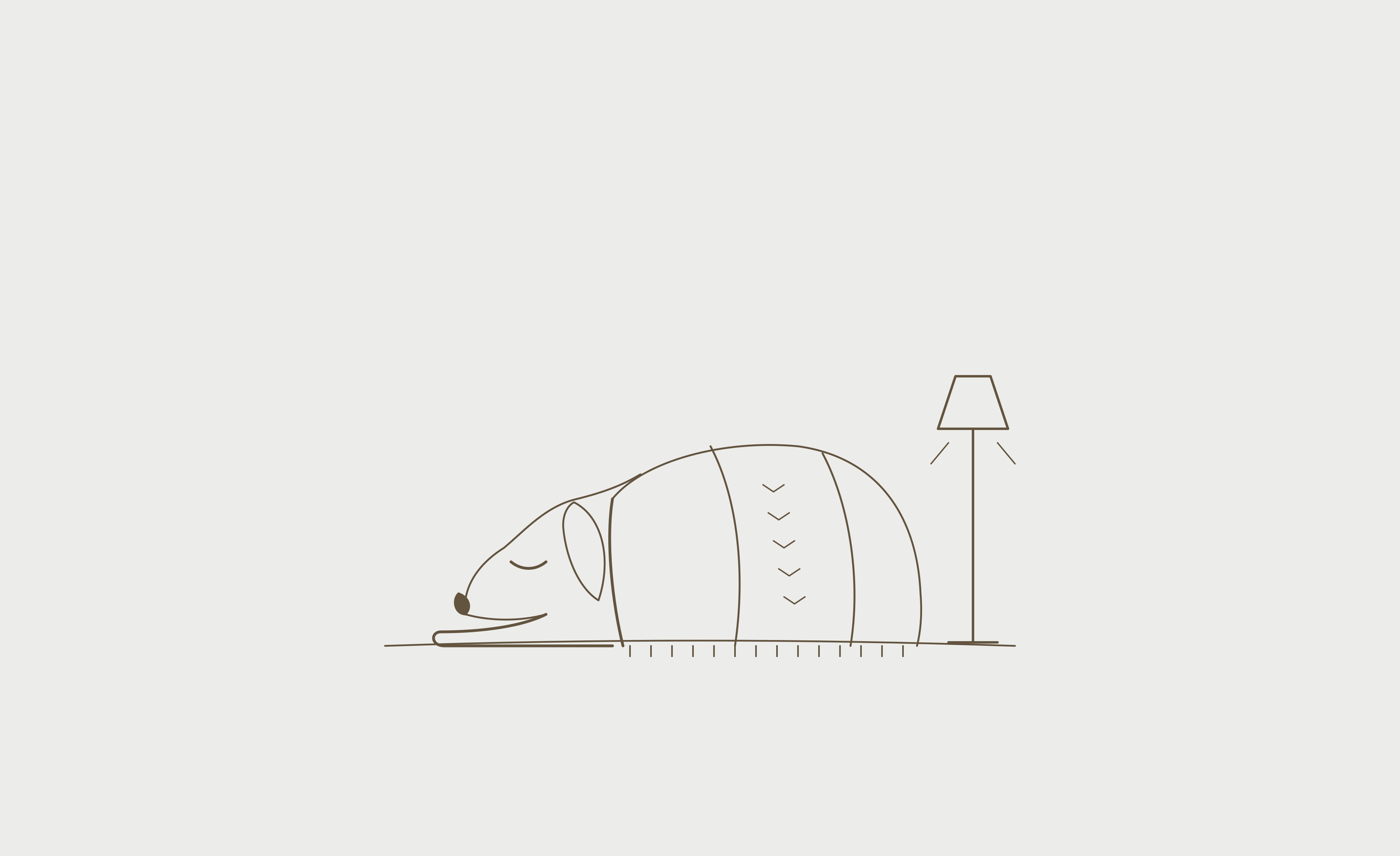
The den. Choose a room at the heart of the home, away from windows. Draw the curtains before dusk and keep a lamp low. Add blankets and something you have worn.
A low, steady sound helps soften the bangs: brown noise, a fan, the television or low music. Brown noise works better than white noise here. It is deeper, with more of the low rumble that fireworks make, so it hides the booms better, while white noise is mostly a high hiss. Try it beforehand, as a few dogs find any new sound unsettling.
Then let your dog choose. If the den turns out to be behind the sofa, that is the den.
Why shouldn't I pull a frightened dog out of hiding?
Hiding is how a dog copes. A hiding place gives back a sense of safety and control, the very things fear takes away. Pulling a frightened dog out takes that control away again, can make the fear worse and, in a dog deep in fight or flight, can lead to a snap or a bite, even from the gentlest dog. Dogs Trust gives the same advice: let your dog choose whether to hide, and if they choose the den, leave them be. Check on them quietly from time to time.
Is it all right to comfort my dog?
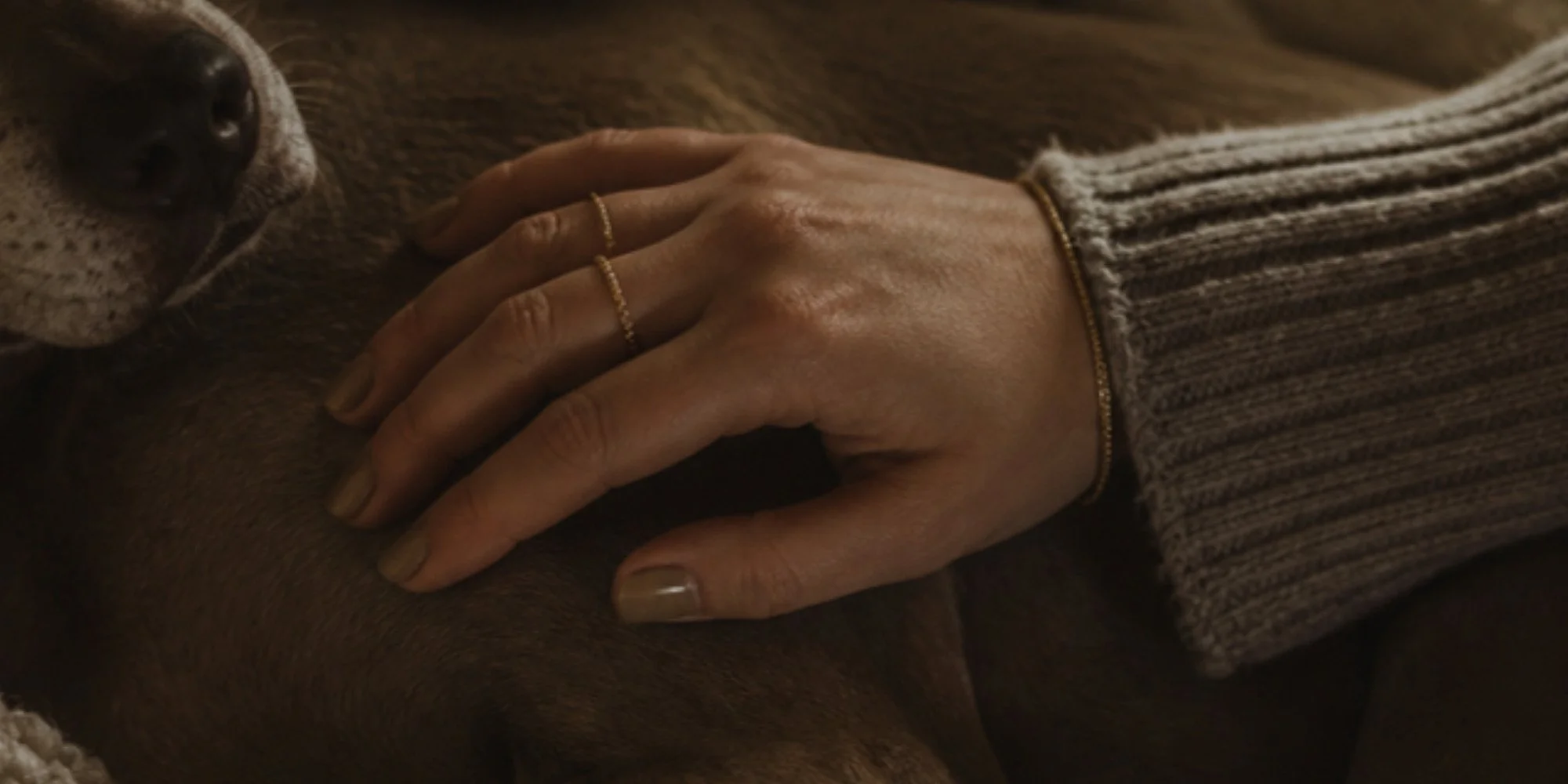
Yes. The old advice to ignore a frightened dog, so as not to reward the fear, has not held up. Fear is a feeling, not a trick to be learnt. If your dog comes to you, be there. Sit low, rest a hand on the chest, and stroke from the neck along the back, slower than feels natural. If your dog would rather be alone in the den, let that be.
Your own state matters most. Dogs read our breath, our voice and our bodies, and in one study a dog's long-term stress levels followed its person's. If you are tense or anxious, your dog will feel it. Before you sit with your dog, settle yourself first: shoulders down, breath slow, voice low and quiet. Be the calm in the room.
What I see, and what I do at home
The two things I see most often on fireworks night are opposites. Some families become anxious and stressed alongside their dog. Others ignore the dog altogether. Neither helps.
My own four are lucky: fireworks barely trouble them. Even so, I make sure I'm at home, and I keep the evening ordinary. If a big bang makes one of them jump, I lightly turn it into play, as if nothing has happened. For a dog who is only startled, not frightened, a calm, present and slightly playful person is the easiest tone to follow.
When should I talk to my vet?
If the fear is severe, with hours of panting and trembling, trying to escape or refusing food, speak to your vet now, well before the season, not on the night. A vet has much to offer, and it works best when planned early.
And if an older dog has suddenly become afraid of noise, tell your vet. Researchers at the University of Lincoln found that dogs whose noise fear was linked to pain in the muscles or joints were, on average, about four years older when the fear began, and they improved once the pain was treated. A new fear can be the body speaking.
The morning after, the air is still again and smells of smoke and wet leaves. Let the first walk be long, and let the nose read everything the night left behind.
Next in the Journal, from the Wolf Wisdom series: the spine, and what IVDD means for a dog.
Lilo Ask-Henriksen, Holistic Animal Wellbeing, London. She trained as a veterinary nurse in Denmark, and was authorised and practised in Norway.
Research
Storengen, L.M. and Lingaas, F. (2015) Noise sensitivity in 17 dog breeds: prevalence, breed risk and correlation with fear in other situations. Applied Animal Behaviour Science 171, 152–160.
Lopes Fagundes, A.L. et al. (2018) Noise sensitivities in dogs: an exploration of signs in dogs with and without musculoskeletal pain using qualitative content analysis. Frontiers in Veterinary Science 5, 17.
Sundman, A.-S. et al. (2019) Long-term stress levels are synchronized in dogs and their owners. Scientific Reports 9, 7391.
Dogs Trust fireworks advice, with the University of Salford.
